

Elysse Matthias18 March 2026
Industry Merges – what happens next?
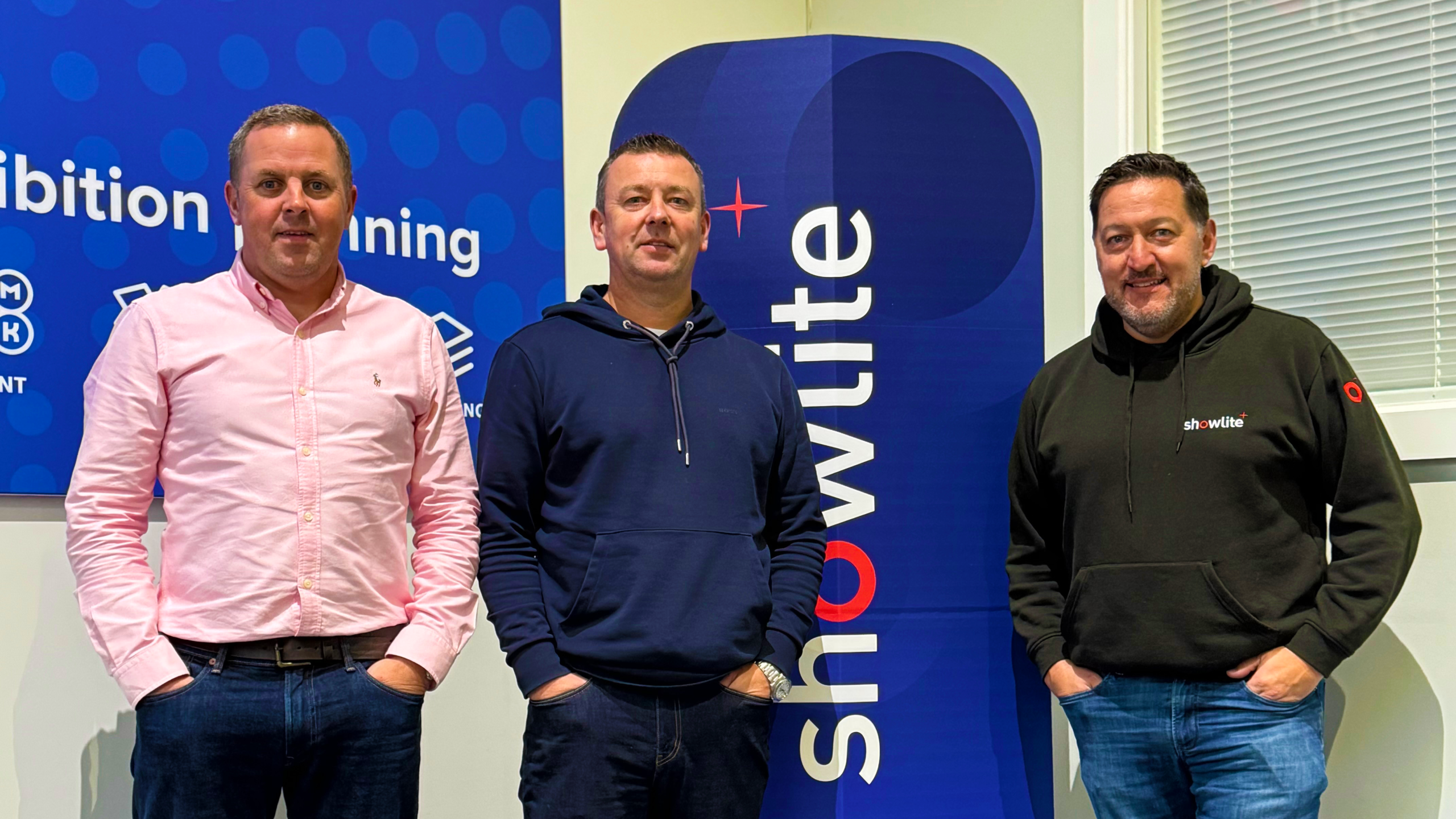

A year on from Showlite’s acquisition of Xav Eight, the headlines have long since moved on. In an industry where mergers and acquisitions are announced with fanfare, we rarely pause to ask the more practical question: how did it actually work in reality?
For Simon Ridout, the previous owner of Xav Eight, and now part of Showlite’s senior team, that question has shaped the past twelve months. Sitting across sales, operations and strategy, he played a central role in integrating the two businesses – not through sweeping change, but by focusing on continuity, capacity and control.
“People buy people,” Simon says. “For clients, the biggest concern was whether they’d still see the same faces and get the same product. We made sure they didn’t have to change anything at their end – manuals, processes and ways of working. It was really important that it just felt familiar.”
That familiarity was helped by the fact that the two businesses already knew each other well. On-site and in the warehouse, the teams had worked alongside one another for years. “The product’s the same at the end of the day,” Simon explains. “We’d been producing shows next to each other for a long time, so it wasn’t about forcing two different ways of working together.”
The transition itself was carefully timed. The buyout completed at the end of October 2024, with Xav Eight continuing to operate through November. December – traditionally quieter – became a deliberate transition window. By January 2025, the teams were working from Showlite’s office and with their systems.
“December was ideal,” Simon says. “There were no live events, so we could move stock, align systems and get ready without the pressure of shows on the floor. When January hit, it was business as usual.”
But continuity was only part of the story. The acquisition also unlocked capacity.
Before the deal, Xav Eight had reached a natural ceiling. Demand was there, but the business was at a crossroads. “We were turning work away,” Simon says. “Clients were asking us to do ten shows when we could only do six.”
Post-acquisition, that changed quickly. “My phone was ringing constantly. ‘So you can do our show again now?’ ‘Can you take the rest of the portfolio?’ Suddenly, we could say yes.”
Crucially, the Xav Eight events also helped smooth Showlite’s calendar. “They filled a lot of the gaps – the peaks and troughs,” Simon explains. “Showlite is geared up to deliver very large shows, but they don’t happen every month. Levelling that out makes a huge difference.”
That stability had a direct impact on people. “We kept our core subcontract team busy for ten or eleven months instead of eight,” he says. “If subcontractors go quiet, they don’t wait around – they go elsewhere, and then when you need them back, you can’t get them.”
Behind the scenes, the acquisition also strengthened Showlite’s in-house capability, particularly in shell scheme. Xav Eight brought significant stock into the business – including Quad – and Showlite invested further. In total, around 4,000 square metres of kit came across, with another 2,000 square metres added.
“The biggest change is confidence,” Simon says. “There’s more stock, better rotation, and far less panic. We haven’t subcontracted any shell scheme at all this year. That gives us more control – over quality, margins and delivery.”
Cultural integration, however, takes longer. Early on, Simon noticed subtle divisions – “Xav Eight shows” or “Showlite shows”, even different colours on planning boards. He moved quickly to remove them. “I remember saying, just take the colour off. It’s all Showlite now. Language matters more than people realise.”
Now, after a full year cycle of shows, ownership is spreading. “Account managers know the clients, know the shows, and can take responsibility,” he says. “That’s when it really starts to bed in.”
Coming from more than 20 years running his own business, Simon admits the move into a larger organisation was personally challenging. “I probably didn’t realise how experienced I was until I moved across,” he says. “In a smaller business, you work across everything. In a bigger one, things can be more siloed.”
That cross-functional mindset also shapes his view on transparency. He actively encourages organisers to visit Showlite’s offices and warehouse. “Come and see what we do,” he says. “See the stock, see the scale of it. We’re not an office above a chip shop.”
The acquisition has also opened the door to European delivery. Many UK organisers now geo-clone events across Europe, and Simon sees continuity as a competitive advantage. “If we can support them in the UK and Europe, that gives them confidence,” he says – while acknowledging the complexity of customs, VAT and labour regulations country by country.
Asked what advice he’d give to other companies navigating a merger or acquisition, Simon is clear.
“Don’t overcomplicate it,” he says. “There’s a temptation to change things quickly so it looks like progress, but most of the time that just creates uncertainty. If something works, leave it alone.”
Visibility matters too. “You can’t disappear once the deal’s done. Clients and teams need to see you.”
And finally, preparation. “Plan as if the deal isn’t going to happen. Book the labour, allocate the stock, make sure the shows can still be delivered. If it does go through, you’re ready. If it doesn’t, you’re protected.”
“At the end of the day,” he says, “clients don’t care about the deal. They care that the show gets built, on time, properly, with people they trust. If you get that right, the rest follows.”


