Elysse Matthias30 March 2026
Exhibition carpet. You don’t notice it – until it’s gone


Simon Ridout, ESSA board member and commercial director at Showlite discusses the somewhat controversial topic of exhibition carpet.
If social media is anything to go by, exhibition carpet has become surprisingly controversial. Over the past few weeks, there’s been plenty of debate about whether carpet still has a place in modern exhibitions. Some see it as unnecessary, others view it as outdated and a few believe removing it is a quick win for sustainability.

From our perspective as a full-service contractor, carpet is integral to what we do. We work across hundreds of shows every year, and we see first-hand how much impact flooring has on the way a space looks, sounds and feels. Which is why it’s worth pausing before we write it off as just another layer that can be stripped away in the name of sustainability.
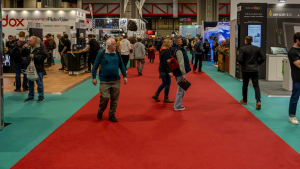
Carpet isn’t simply decorative, it plays a critical role in how an exhibition performs – visually, acoustically and experientially. It anchors a space, softens sound, guides movement and helps an event feel intentional rather than temporary.
What about acoustics?
Acoustics alone make a compelling case. Without carpet, sound travels further and harder, conversations echo, background noise increases and the environment becomes more tiring for both exhibitors and visitors – especially those with hearing or processing differences. What should feel like a live, engaging space can quickly become harsh and uncomfortable.
As an industry, we often talk about efficiency and sustainability – and rightly so. But removing something without understanding its function can have the opposite effect. A space may look cleaner on paper, but if it feels unfinished or unwelcoming, have we really improved the experience?
The answer isn’t less thought, it’s better thought. Design choices matter, materials matter, and the experience people walk away with matters most of all.
Not every show needs wall-to-wall carpet
That doesn’t mean every show needs wall-to-wall carpet. It’s horses for courses – some events benefit from exposed floors and a more industrial aesthetic, whilst others need warmth, flow and acoustic control. Consumer shows and trade shows have very different requirements, sustainability priorities also vary from organiser to organiser, as do budgets and brand objectives. The key is being intentional rather than reactive.
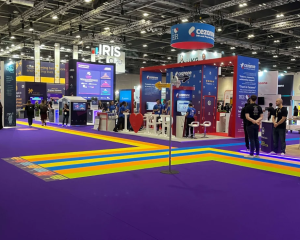
Carpet can actually become part of the “storytelling” of an event. It can help lead visitors to key features and areas, it defined zones, created flow and support the overall experience.
Sustainability has to be part of this conversation too. Different organisers place value on different outcomes: reuse, recycling, modularity and carbon reduction. Some suppliers, ourselves included, recycle 100% of the carpet we use after each show.
The role of a carpet supplier shouldn’t be to impose a single solution, but to work with clients to find the best option within their priorities. Sometimes that means using carpet differently, sometimes it means using less and sometimes it means using it smarter.